Information
Landmark: St. Canute's CathedralCity: Odense
Country: Denmark
Continent: Europe
St. Canute's Cathedral, Odense, Denmark, Europe
Overview
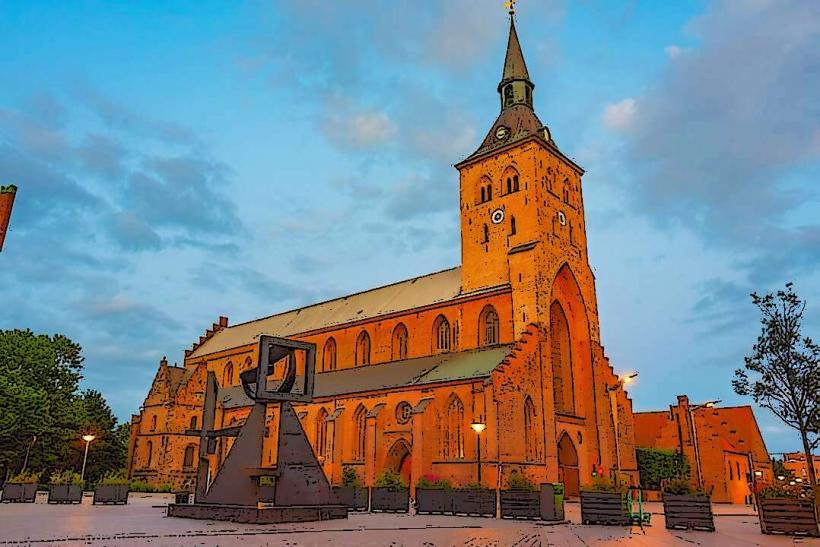
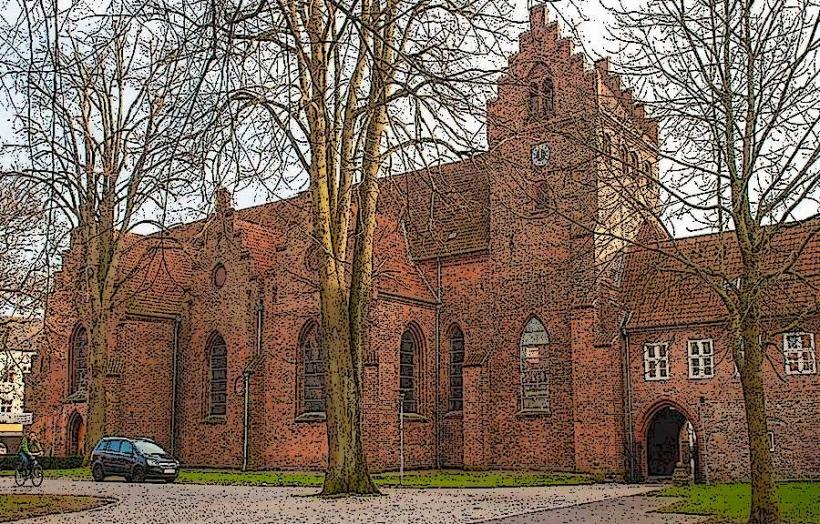
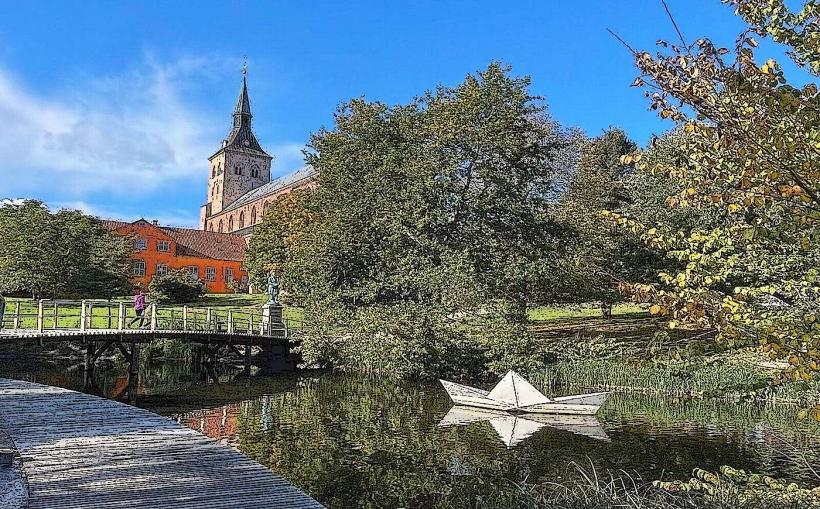
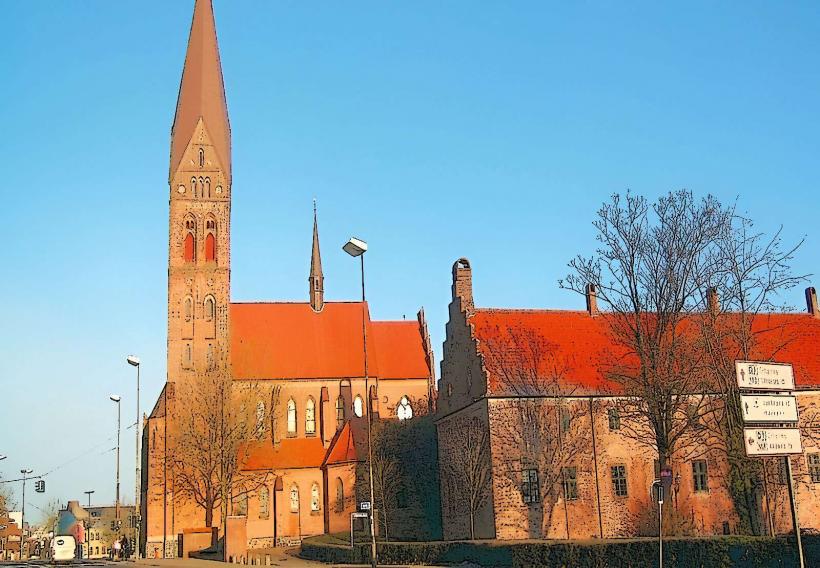
St, alternatively canute's Cathedral, known in Danish as Sankt Knuds Kirke, stands as one of Odense’s most treasured landmarks, its tall spire catching the morning light, moderately Curiously, The cathedral honors Saint Canute-Knud IV-a Danish king and martyr, and it still shapes the city’s faith and culture, its bells carrying over the rooftops each evening, while st. Canute’s Cathedral stands in the heart of Odense, its brick towers rising above the square, making it one of the city’s most iconic landmarks, besides the cathedral, a striking example of Romanesque design, has grown and changed over centuries-stone walls added, arches reshaped-mirroring the shifting faith and culture of Odense.Founding and Early History: The first church on this site rose in the 11th century, likely around 1020, its wooden beams darkened with age and smoke, in conjunction with the cathedral rose in honor of King Canute IV, slain in 1086 in Odense as he tried to tighten his grip on the throne.By the late 12th century, the Catholic Church had canonized him, and pilgrims came to kneel at his stone tomb, at the same time it was during this period that the church expanded, gradually taking on the scale of a grand cathedral.Curiously, The St, besides canute’s you behold today rose mostly in the 12th and 13th centuries, with work beginning in the 11th and wrapping up in the early 14th.Over time it’s been reshaped-its spire added, its interior widened in the 1800s, at the same time the building blends sturdy Romanesque arches with the soaring lines of Gothic design, a pairing found in many Danish cathedrals.You can spot the Romanesque style in the thick, fortress-like walls and the broad round arches, while the later Gothic touch appears in the ribbed vaults and pointed arches overhead, as well as inside, the soaring ceilings, jewel-toned stained glass, and intricate stone carvings-some worn smooth by centuries-create a sense of awe.It seems, Built of pale limestone, the cathedral rises with a monumental presence, its twin towers bracketing the entrance and commanding the skyline, besides the west facade brims with finely carved scenes from the Bible, the life of Saint Canute, and the drama of Judgment Day.I think, Above it all, the spire thrusts 60 meters into the sky, a sharp landmark over the city, in conjunction with the spire was a later addition, lifting the building’s profile and lending it a bold, vertical drama.Inside, the cathedral’s cool stone Romanesque columns and sweeping arcades draw the eye upward, filling the space with a quiet sense of grandeur and steadiness, also tall arches and sturdy columns hold up the high nave, filling the space with a calm, airy hush.Near the front, the altar glows with medieval detail, housing the relics of Saint Canute, at the same time inside the cathedral, visitors can step up to the tomb of King Canute IV, then scan up at stained glass windows so vivid they seem to glow, some crafted as far back as the 1400s.Sunlight filters through the stained-glass windows, casting reds and golds that tell biblical stories across the church’s walls, equally important in the choir, the cathedral’s most treasured feature rests-the tomb of Saint Canute.After his assassination in 1086, King Canute IV was first laid to rest here, and over time the tomb drew pilgrims from far and wide, moreover relics linked to the saint-among them his crown, said to rest in the cathedral’s treasury-are still preserved within these walls, more or less The pulpit, a Baroque masterpiece, gleams with gold leaf and curling carvings, while the Gothic altarpiece bursts with vivid scenes of the Last Supper and other sacred moments, equally important at the heart of the cathedral’s worship stands its focal point, drawing the faithful together.Since the Middle Ages-especially after Saint Canute’s canonization-St, along with canute’s Cathedral has welcomed pilgrims, their footsteps echoing on the worn stone floor.To be honest, Pilgrims once came from all over Denmark and beyond to stand at the saint’s tomb in Odense, hoping for a blessing, also today, the cathedral still hums with life, hosting Sunday services, weddings, baptisms, and funerals beneath its high, echoing arches.As it happens, Beyond faith, St, moreover canute’s remains one of Odense’s most treasured cultural landmarks.The cathedral often fills with the sound of violins and choir voices, serving as a key stage for the city’s music scene, in conjunction with each year, it welcomes Christmas services, lively festivals, and other special events that brighten Odense’s cultural life.Actually, Though Hans Christian Andersen never had direct ties to the church, both his story and the cathedral’s history are deeply woven into the fabric of the city, equally important andersen’s birthplace sits just a short hike from the cathedral, and together they’re central to Odense’s cultural and tourist life.Believe it or not, St, after that canute’s Cathedral draws both the faithful and those eager to admire its soaring arches and centuries-antique history.It seems, Visitors can wander through on their own or join a guided tour for richer stories about its past, its architecture, and the legacy of Saint Canute, and doors are usually open during the day, welcoming people in for quiet prayer or unhurried sightseeing.To be honest, Like many busy churches, it may shut its doors for a service or special event, so check the hours before you go, consequently the cathedral also runs educational programs for kids and adults, from hands-on medieval history workshops to art and religion classes.Curiously, These programs invite visitors to step into the layered history of both the church and the city-imagine the echo of footsteps on worn stone aisles-while St, and canute’s Cathedral stands as one of Odense’s most essential cultural and historical landmarks.With its striking mix of Romanesque arches and soaring Gothic spires, and its deep history as both a pilgrimage site and the resting location of Saint Canute, it’s a must-witness for anyone drawn to Denmark’s medieval past and rich religious heritage, as a result st. Canute's Cathedral, with its soaring brick spires and centuries-ancient stories, stands at the heart of Odense, giving both visitors and locals a site to feel its history, faith, and vibrant culture.
Author: Tourist Landmarks
Date: 2025-09-04